The Garner-Howes Baptist Commentary of the Whole Bible

The Garner-Howes Baptist Commentary of the Whole Bible
taken from Wordmodules.com
The Garner-Howes Baptist Commentary of the Whole Bible was originally published as a 23-volume set by Albert Garner (principal author) along with J. C. Howes, G.F. Crumley, and Eugene Garner in 1985. The Blessed Hope Foundation has released this digital edition into the public domain and has been converted to e-Sword format by the editor of the Baptist Training Center (Danny Jones) via s-Sword Tooltip Tool NT.
Interpretations are written in the language of the common man, designed especially for Bible teachers, Sunday School teachers, laymen and ministers who desire to know the meaning or find an explanation on any particular passage.
All interpretations are based on:
1. the root meaning of the words
2. the subject matter considered
3. the contextual setting of the subject matter and time element considered.
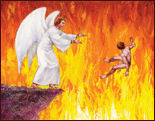 How can a loving God send people to hell? explains how God's love interacts with God's judgment and wrath. Love has to involve two people, and when somebody does not respond correctly to God's love, God is despised and spurned, therefore it is logical that God excludes that person from all the God has to offer.
(https://www.theologicalsystems.com/god/how-can-a-loving-god-send-people-to-hell/)
How can a loving God send people to hell? explains how God's love interacts with God's judgment and wrath. Love has to involve two people, and when somebody does not respond correctly to God's love, God is despised and spurned, therefore it is logical that God excludes that person from all the God has to offer.
(https://www.theologicalsystems.com/god/how-can-a-loving-god-send-people-to-hell/)
The authors of this commentary are conservative, independent, landmark, missionary Baptists.
”””””’Resource downloaded from BibleSupport website and converted using theWord Importer Tool.
Garner Howes Baptist Commentary.cmt
More Commentaries on Whole Bible
- Anthology of Sermons
- Apologetic Bible Commentary ABC
- Arend-Remmers Bible Books Overview.cmt.twm
- Barclay Daily Bible Study.cmt.twm
- bass-elder-hulan-comments-twv6-twid.gbk.twm
- Baxter New Call to Holiness.cmt.twm
- Believer’s Bible Commentary
- Benson Bible Commentary
- Bible Teacher’s Commentary
- Biblical Illustrator (BI) v1 v2
- BKC.cmt.twm
- BNTC Commentary.cmt.twm
- Bonar Commentaries.cmt.gbk
- Bonar, Horatius Light and Truth 4 volumes
- Bridgeway Commentary
- Broadus Sermons.cmt.twm
- Bullinger Bible Commentary
- Burnz Sketches and Sermons.cmt.twm
- Calvin Commentary Complete
- Calvin John Complete Commentary
- Calvin John Complete Commentary
- Cambridge Bible for Schools and Colleges.cmt.twm
- Carr The Bible: God’s Perfect Word
- Carroll Interpretation of the English Bible Commentary
- Charles Box Commentaries (Church Christ)
Advertisement
Using theWord Module layout Sets theWord does not just read the particular modules (books) you have in its folder. These books must be registered and added to a "Module Layout Set", which one of these must be chosen. So you can separate, slice and dice your library as you wish, or put them all into a single library. But the module may be invisible if you do not correctly set this up on adding a new module. This class explains all of how to do this.